
Flock and Urban Surveillance
Some years ago, I had a frustrating and largely fruitless encounter with the politics of policing. As a member of an oversight commission, I was particularly interested in the regulation of urban surveillance. The Albuquerque Police Department, for reasons good and bad, has often been an early adopter of surveillance technology. APD deployed automated license plate readers, mounted on patrol cars and portable trailers, in 2013. Initially, the department kept a six-month history of license plate data. For six months, police could retrospectively search the database to reconstruct a vehicle, or person's, movements—at least, those movements that happened near select patrol cars and "your speed is" trailers. Lobbying by the American Civil Liberties Union and public pressure on APD and city council lead to a policy change to retain data for only 14 days, a privacy-preserving measure that the ACLU lauded as one of the best ALPR policies in the nation.
Today, ALPR is far more common in Albuquerque. Lowering costs and a continuing appetite for solving social problems with surveillance technology means that some parts of the city have ALPR installed at every signalized intersection—every person's movements cataloged at a resolution of four blocks. The data is retained for a full year. Some of it is offered, as a service, to law enforcement agencies across the country.
One of the most frustrating parts of the mass surveillance debate is the ability of law enforcement agencies and municipal governments to advance wide-scale monitoring programs, weather the controversy, and then ratchet up retention and sharing after public attention fades. For years, expansive ALPR programs spread through most American cities with little objection. In my part of the country, it seemed that the controversy over ALPR had been completely forgotten until one particularly significant ALPR vendor—Flock Safety—started repeatedly stepping in long-festering controversies with such wild abandon that they are clearly either idiots or entirely unconcerned about public perception.
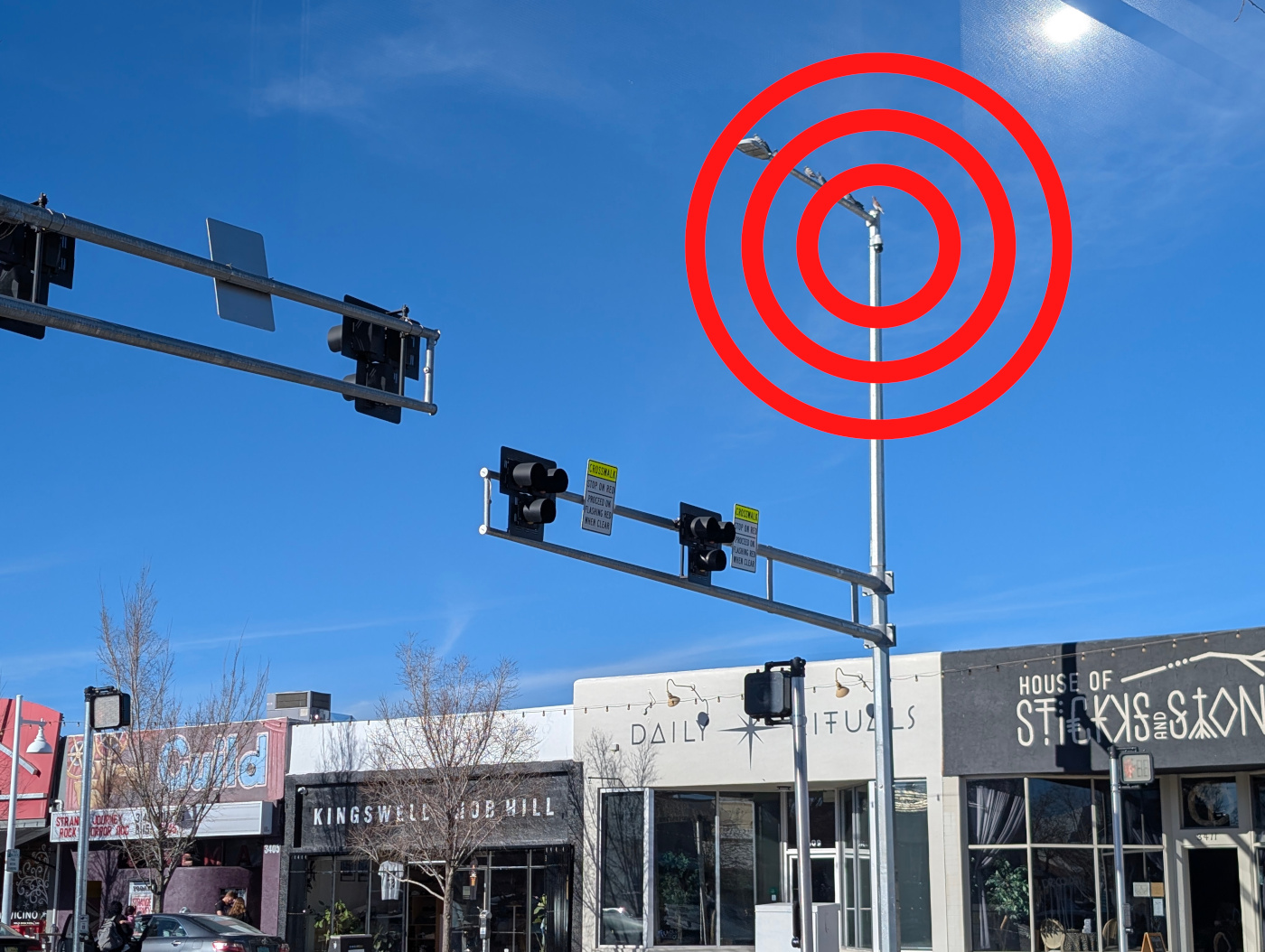
I try not to be too cynical but I am, unfortunately, more inclined to the latter. Companies like Flock know that they are in treacherous territory, morally and legally. They know that their customers are mostly governments or organizations with elected leaders that are subject to popular opinion. They know that helping Texas law enforcement track down abortion seekers in other states is a "bad look." They know all of these things, but they do not particularly care. They don't have to care: decades of incipient corruption, legal and political maneuvering, and the routine inefficacy of municipal politics has created an environment where public opinion doesn't matter.
I can't definitely tell you where public opinion lies on ALPR, although it seems like the average person might be mildly in support. From at least my experience, in my corner of the world, I will tell you this: it doesn't matter. Police departments and the means by which they purchase and field technology are so isolated from the political process that it is extremely difficult to imagine a scenario where voters could affect change. Year by year, city by city, the police become more dug in. Law enforcement agencies across the country have found that the most straightforward way to address privacy concerns around surveillance technology is to keep the department's purchase and deployment of that technology a secret. Most city governments at least passively support this approach. The vendors of surveillance systems facilitate, support, and even demand secrecy through their contract terms.
More recently, Las Vegas and the Bay Area have offered a model even more opaque to public scrutiny: law enforcement surveillance technology is simply purchased by wealthy private donors, almost invariably from the software industry, and then either the systems or their use are donated to the city. If carefully designed, these programs can be completely exempt from public information rules. They can take the form, for example, of a business association that runs its own private surveillance state, involving the public and ostensibly accountable police only when an arrest is made. We are privatizing mass surveillance.
Flock continues to generate enormous press, mostly on the back of persistent investigation by 404 Media. More recently, security researchers have published significant defects in the design of Flock's technology that can make the original video publicly accessible. Just about every time that someone looks into Flock, the company turns out to be less ethical, the users less concerned about compliance, the design of the system itself less competent than charitable viewers had assumed.
I'm trying not to be a doomer for Christmas, but I am sometimes frustrated with Flock coverage because it can miss the entire history of this issue. I think that a more contextually complete discussion of urban surveillance could be useful. And I am sitting in a coffee shop, in a trendy part of town, looking out the window at a PTZ camera on the side of a traffic light. That camera, I know, is owned and operated by APD's Real Time Crime Center (RTCC). Between the police department itself, city agencies that participate in the RTCC, and businesses that volunteer real-time access to their surveillance, there are thousands of others like it. Courtesy of a transit station, there are at least a dozen within my view.
Whether or not this is a good or bad idea, whether or not it is effective in reducing crime, whether or not it will be leveraged against political opposition; these are tricky questions. I suppose what worries me is that it feels like hardly anyone is asking them any more. It took Flock's remarkable ability to step on rakes and the apparent victory of fascism in national politics for anyone to remember that the construction of ubiquitous surveillance is a project that started many years ago, and that has proceeded largely unhindered ever since.
Domestic Signals Intelligence
Within the tech community, there has historically been much attention to the ability to track people by passively observing Bluetooth traffic. This technique has been widely used, both in commercial and government applications. There are popular "smart city" street lighting systems, for example, that allow every street light to passively collect signatures of the people passing underneath it. To my knowledge, these techniques are not actually very widely used by law enforcement. There are, perhaps, two reasons: one of mechanisms of government, the other of countermeasures.
First, "smart city" data collection systems are usually funded and deployed by municipal works or environmental departments. While police could make arrangements for access to that data, those arrangements would require the kind of inter-agency Memoranda of Understanding that tend to lead to far more public scrutiny than police acquisitions of surveillance products. Besides, since they aren't deployed for law enforcement purposes, they're often not useful sources for the areas that law enforcement find most interesting: higher-crime areas that are usually lower-income and, thus, less likely to have working street lights at all—much less "smart" ones. Besides, smartphones have widely adopted randomization of Bluetooth and WiFi identifiers, and protocol revisions have reduced the number of identifiers transmitted in plaintext. Passive signals intelligence just doesn't work as well as it used to, at least at the capability level of a municipality.
Talking about Bluetooth and WiFi on phones does raise the question of the "phone" part, the cellular interface, which is targeted by the family of devices often known as "Stingrays" after the trademark of a particular manufacturer. Fortunately, improvements in the security design of cellular protocols is making these less effective over time. Unfortunately, the technology continues to advance, sometimes undoing the improvements of newer GSM revisions. Federal and local law enforcement continue to purchase and use these devices, largely in secret, benefiting from a particular model of federal ownership/local use that makes it especially difficult to get a police department to even confirm or deny that they have ever deployed them. "Stingrays" or IMSI surveillance is mostly a shadow world of rumors and carefully worded non-denials. Despite technical measures against them, they are clearly still in use, and thus clearly still useful.
Optics
Out in the rest of the world, visual surveillance is more salient than radio. Early rollouts of police-operated surveillance, dating back to at least the 1970s, generated some controversy over privacy implications. Two things have since happened: first, law enforcement have relied on an increasing number of public-private partnerships and commercial vendors to gain access to surveillance without directly owning it. Second, police video surveillance has largely been normalized, and no longer faces much opposition or even public notice.
One of the interesting changes here is one of visibility: police video surveillance has often edged in and out of public awareness to fit the politics. In periods of pro-privacy, anti-surveillance sentiment, departments rely more on voluntary arrangements for access to cameras installed by others. In periods of pro-police, anti-crime sentiment, departments install cameras with flashing lights and police badges. Both types tend to persist after the next change in the tide.
The public usually knows little about these systems, a result of intentional opacity by police departments and a general lack of interest by the press. That leads to a lot of confusion. Where I live, we do have an extensive network of police-operated cameras on intersection traffic signal arms. And yet, if you ask the average person to identify a police surveillance camera, they will point to the camera for the traffic signal's video-based lane occupancy sensing every single time. That's not a a police camera, it's barely even a camera as the video is rarely retained. All of these people, it seems, have worked themselves into a sort paranoia where they think that every camera is an eye of the police. Well, the police are watching them, from about ten feet over. The "speed dome" PTZ cameras get so much less attention, perhaps because they are usually mounted on the pole further from sightline, or perhaps because they are of a type more common for commercial surveillance systems that we have learned to simply ignore.
Video surveillance is an interesting topic to me, philosophically. I am largely unconcerned with the privacy implications of most video surveillance installations (such as the one on my own house) because, historically, the video was recorded locally and generally reviewed only when there was a specific reason. The simple fact that reviewing large amounts of video is so time consuming meant that the pervasive surveillance potential of video surveillance was, at one time not so long ago, quite limited.
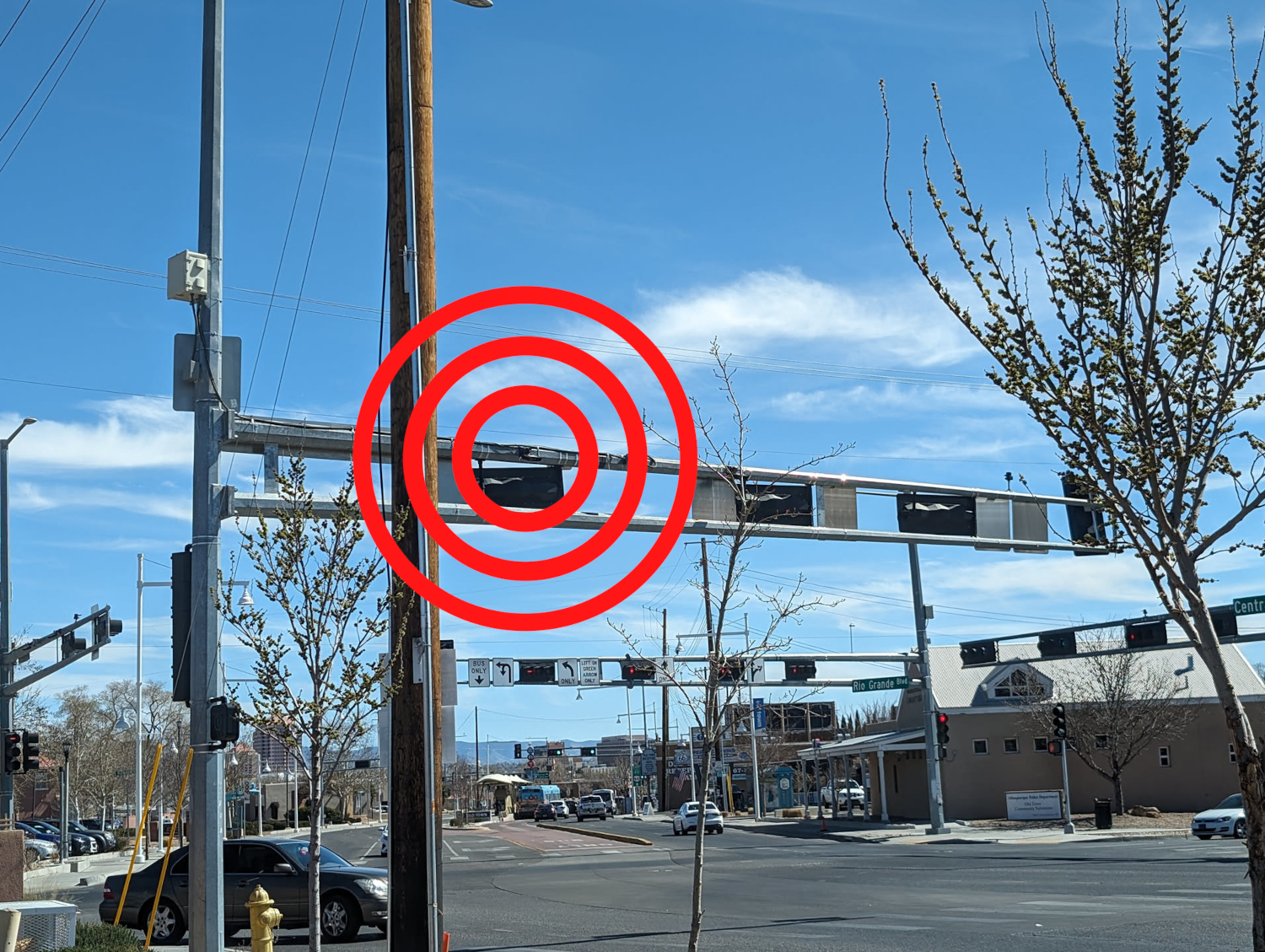
Of course, the age of the computer has somewhat changed that situation. There are two phenomenon of the automation of surveillance that I think should be considered separately: first, machine vision has improved to an extent that computers can automatically process surveillance video to extract events and identities. Second, the appified, everything-social-media attitude of consumer products creates new dynamics in access to surveillance data, and those dynamics are spreading upwards into the commercial segment.
Machine Vision
Historically, much of the attention to video pervasive surveillance has centered around facial recognition. Facial recognition has indeed been applied to video surveillance for years, but I think that the average person vastly overestimates how effective and widely used facial recognition is.
The vast majority of currently installed surveillance cameras do not produce video of sufficient quality for facial recognition. That has less to do with the quality of the video itself (although that is poorer than you think for most real systems) and more to do with the way that surveillance cameras are used and installed. Most cameras are positioned high up with wide coverage of a room; this perspective is ideal for reconstructing a series of events but just about the worst case for facial recognition. For most surveillance cameras, human faces are small and at indirect angles. There is little geometry that you can extract from a face that is about ten pixels wide and subjected to aggressive h264 compression, which is how most surveillance video comes out.
Practical facial recognition systems involve cameras installed specifically for that purpose, roughly at eye level where they will get close-up, straight-on images of people who pass by. Next time you visit a bank branch, look by the exit doors for a conspicuously thick height strip. Height strips by exit doors were invented to allow clerks to give police a more accurate description of a robber, but they have since evolved to serve largely as subterfuge. Somewhere around 5' 6", you will notice a small hole, and behind that hole is a camera. Several manufacturers offer these and they seem very popular in financial services.
Kroger is more to the point: they've just been installing dome cameras right at eye height on their exit doors, for at least a decade.
When discussing surveillance, it's important to remember that the vast majority of real-world video surveillance systems are old, inexpensive, and poorly maintained. Even where cameras are installed specifically for a good view of faces, there probably isn't any facial recognition in use, most of the time. Facial recognition products are expensive and don't currently manifest many benefits unless the organization is large enough to have a security department to work with the resulting data, which requires a degree of operational maturity beyond most surveillance users (e.g. gas stations).
All of that said, there are plenty of real-world facial recognition deployments. Rite Aid, for example, prominently rolled out facial recognition to flag known shoplifters at their stores... a rollout that went so poorly that it lead to a lawsuit and an FTC settlement including the end of the facial recognition program and a five-year moratorium on further attempts. This is not to say that facial recognition on video surveillance isn't legal (although in some states it isn't or at least requires a lot of disclosure), but there is definitely a degree of legal and reputational hazard involved.
The ACLU has periodically conducted call-around surveys on use of facial recognition. The most notable trend is that most large chains now refuse to talk about it. I could be wrong, but my experience with corporate communications behavior leads to me to interpret a refusal to comment along these lines: Home Depot, for example, is a very large company that will have various initiatives underway, and either confirming or denying their use of facial recognition would probably be wrong in some cases and expose them to compliance or legal risk in others. I would bet good money that Home Depot has some facial recognition technology deployed at some locations, but knowing how slowly security technology tends to roll out in that kind of company and how complicated the legal and compliance situation can become, it's probably limited. They are probably acutely aware of the controversy surrounding this type of surveillance and, given the example of Rite Aid, the ways a rollout could go wrong. That means that surveillance will spread slowly.
But it will spread. At this point, I think it is inevitable that facial recognition will become widely used in video surveillance. I just think the point at which "facial recognition is everywhere" remains some years away, due to all the normal reasons: technical limitations, slow-moving bureaucracies, and a somewhat complex and unclear regulatory situation. It will inevitably happen, for the same reasons as well: aggressive sales by facial recognition vendors.
There are some sectors where facial recognition is very common, although I don't get the impression that retail is one of these yet. Casinos, for example—some of the larger Las Vegas casinos have reportedly had facial recognition systems in use for decades, and Nevada law is very permissive of them. Casinos are, of course, pretty much ideal users. Large institutions with a lot of financial risk and large, sophisticated security departments. Few other businesses outside of Target can compete with the size and sophistication of casino security departments. There's a whole lot of money flying around, and they can spend some of it on expensive per-camera licensing without much leadership objection.
License Plate Reading
Popular attention to facial recognition has mostly fallen away as industry and media focus has shifted to another application of machine vision that is, it turns out, a whole lot easier: license plates. License plates are designed for readability, and most states use retroreflective paints that give you an absolutely beautiful high-contrast image under coaxial (i.e. mounted alongside the camera) infrared illumination. There's not much that is easier to read by machine vision. Automated license plate readers have been available for quite a long time: US CBP had an experimental ALPR installation at a Texas border crossing in 1994. That system was actually deemed a failure and removed, but technology improved and there were permanent installations at larger border crossings by the end of the 1990s.
For a long time, the dominant vendor of ALPR equipment in the US was Motorola. Motorola's product line remains popular for vehicle-mounted systems, but the high price of the cameras, controllers, and software package had a side benefit of limiting the pervasiveness of ALPR. The equipment was just too expensive to put up all over the place.
In Albuquerque, for example, the ALPR program long consisted of Motorola systems mounted on portable "your speed is" trailers. The portable nature of these setups made the expense more worthwhile, and besides, portability has its own utilities: an APD detective once told me, for example, of how they would leave ALPR trailers in front of the houses of people suspected to lead criminal gangs. While there was value in the intelligence collection, the main motivation was intimidation: while you might call the "your speed is" trailers a concealed system, they're not all that subtle, and one supposes that most vehicle-based criminals (the main kind here) are aware that they function as the eyes of the police.
At some point, in response to growing budgets or lowered costs I'm not sure, APD began installing fixed Motorola ALPR systems on the light arms of major intersections. I know of around a dozen installations of this type in Albuquerque, which is the beginning of a widespread capability to monitor public movements but not exactly the dystopian pervasive surveillance of Minority Report.
ALPR works pretty well, but it is not perfect. Cameras need to be installed with fairly narrow optics aimed at the right spot, and infrared illumination makes reading far more reliable. Speaking of Las Vegas, I used to use a certain casino parking garage with an ALPR-based payment system with some regularity. It printed the license plate, as read by the ALPR, on the parking ticket, which is why I know that it was almost comically inept at reading my very legible California plate. It always got about half the characters wrong. I have gotten much better results in my own home experiments with budget equipment, so I figure that system must have been very poorly installed or maintained, but I'm sure there are plenty of others out there just like it.
That's the tricky thing about video surveillance, from the "blue team" side of the house: people don't tend to pay a lot of attention to it until there's been an incident, at which point they find out that the lens has had mud on it for the last three months (a much bigger problem with ALPR cameras that used to be mounted pretty low to the ground for a better look angle). I bring this up because I think that people tend to vastly overestimate the quality of real-world video surveillance, and I like to take every opportunity to remind people that the main failure case of retail video surveillance used to be failure to replace the continuous-loop tape cassette before it was completely demagnetized by repeated recording. Now, in 2025, the continuous-loop tape cassettes are pretty much gone, but maintenance practices haven't improved. Lots of the cameras you see in public only barely work or don't work at all. So it goes.
Flock
In 2017, though, a VC-backed (and specifically YCombinator) company called Flock Safety introduced a bold new idea to ALPR: a Silicon Valley sales model. Flock's system is built to be low-cost, and the sensors are smaller, simpler, and cheaper than Motorola's. I suppose they might be less effective as a result, but a reduced "catch" rate doesn't really detract from mass-surveillance ALPR installations that much. Flock has also greatly expanded their customer base, emphasizing sales to private organizations as well as law enforcement and government. Speaking of Home Depot, for example, Home Depot seems to have installed their own Flock cameras in all of their parking lots. Lowes Home Improvement has done the same.
I wanted to know more definitely how much Flock systems cost, because I suspected they were making significant inroads just through low pricing. It's a little tricky to say definitively because Flock is a "call for quote" kind of company and I think they offer contracts on different price bases. Scouring contracting documents, meeting notes, etc., it seems like a "typical" cost for a Flock camera is around $4,000 with about $3,000 a year in per-camera software licensing fees.
That might seem expensive but it compares well to the five-figure prices I have heard associated with Motorola systems, especially since the Flock offering is more "white glove" with installation and maintenance packaged. Motorola systems are usually purchased through an integrator who adds their own considerable margin.
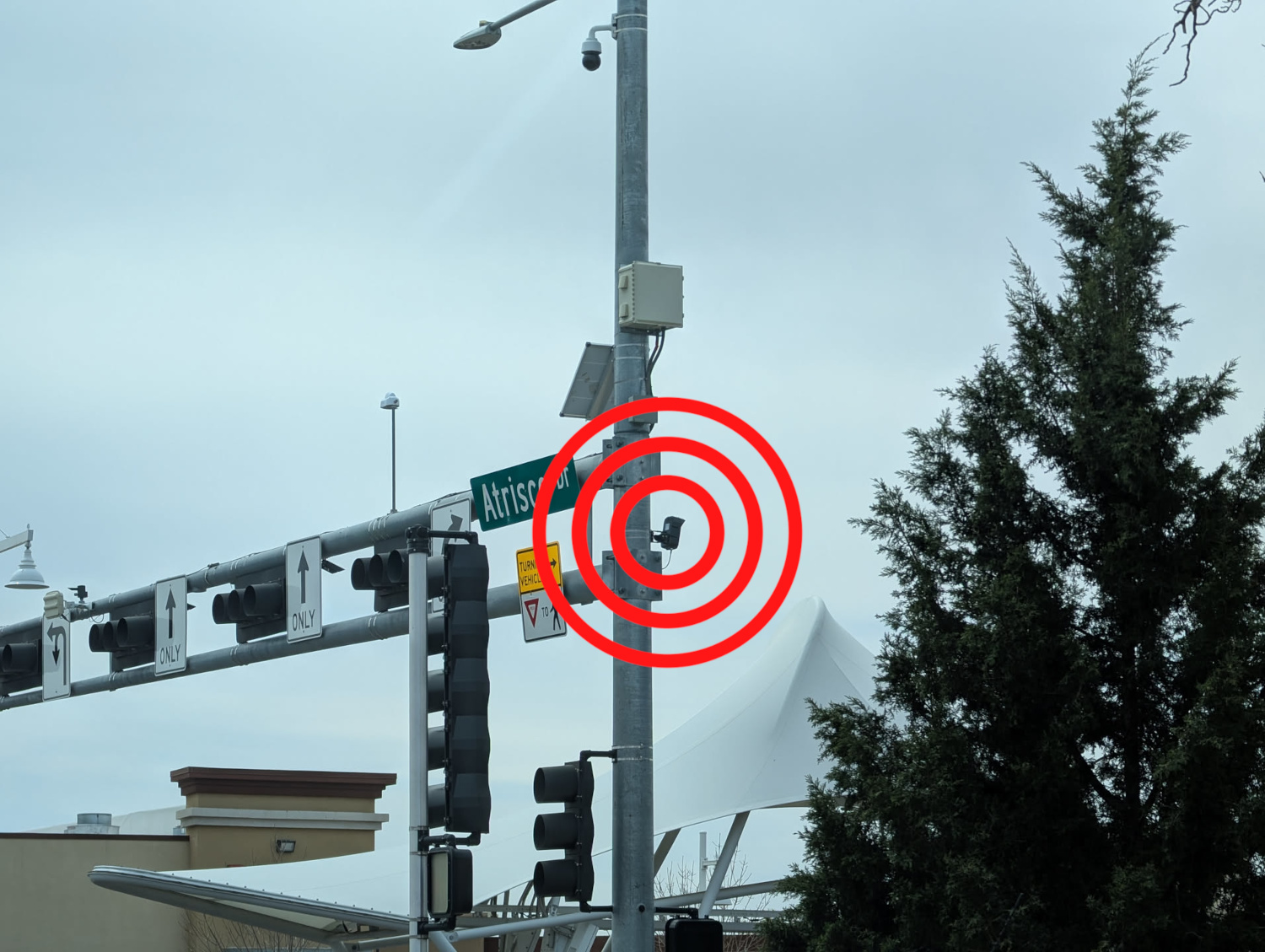
Flock also designs their cameras to be amenable to solar power, which radically reduces install costs compared to Motorola systems that usually need a utility worker out to splice power from a streetlight. More even than a price reduction, it makes Flock cameras much more available to organizations like HOAs that control territory in a sense but do not have the full bucket truck or utility work order capabilities of a municipal government.
Another recent innovation in ALPR is less traceable to Flock but certainly seems associated with them: flexible funding sources. Police departments have limited budgets with which to acquire new technology, and technology vendors have to compete with other budget priorities like salaries, vehicles, and black-on-black tactical vinyl jobs for those vehicles. ALPR seems especially attractive for public-private partnership mechanisms, so there are a lot of Flock installations that were funded by business associations, HOAs, neighborhood associations, and other "indirect" sources. Some of these systems are owned and operated by the police with only the funding donated, others are owned and operated by the private group that paid for them. This can result in curious deployment decisions: sometimes the lowest-crime neighborhoods are the most replete with ALPR, as they tend to be wealthier and more politically organized communities with the wherewithall to put up the money.
The most important thing to understand about Flock, though, is that it has built on Amazon's concept of "Ring neighbors" to build a sort of nationwide, ALPR-centric Nextdoor. Flock customers can basically check a box that allows other Flock customers to access data from their sensors, and of course Flock strongly encourages users to turn sharing on. While there are some audit and access controls available on Flock data sharing, they seem like pretty minimal efforts that are often ignored.
Flock sharing has generated a lot of press, especially with some dramatic examples like use by a Texas sheriff to locate an abortion patient and use by ICE/CBP to track suspects. These are both examples that raise one of the most alarming aspects of the Flock situation: many states and municipalities have laws in place that limit or at least monitor collaboration of local police with other police agencies and federal law enforcement. Some people find this surprising, but it's important to understand that the United States is a republic of nominally independent governments. Laws, policies, and priorities can vary greatly from jurisdiction to jurisdiction. There is a specific historical thread, related to the tracing of escaped slaves, that has made resource sharing between different law enforcement agencies a known area of moral and legal treachery for a very long time.
And yet, it turns out, most Flock customers seem to have sharing turned on, possibly entirely without their knowledge. There are now multiple well-established cases of local law enforcement agencies violating state laws by having data sharing with ICE/CBP enabled. It is possible for Flock users to turn off or restrict sharing, but I think a lot of them honestly don't know that. Some state Attorneys General have ordered Flock users to disable sharing, some have restricted or banned Flock products entirely, but in general it's a very messy situation. It appears that a lack of care by law enforcement and other Flock customers, facilitate and no doubt encouraged by Flock's motivation towards "network effect" lock-in, has resulted in widespread and brazen violation of privacy laws that is only now making its way to the courts.
In other words, the tech industry happened.
Acoustics
I will not spend much time here discussing wide-area acoustic surveillance like ShotSpotter, in part because I have written a bit about it before. It's a complex issue: a well-designed gunshot detection system would probably be a good thing, but I find SoundThinking (manufacturer of the ShotSpotter system) to be profoundly untrustworthy.
Futures
The changes we are already seeing will continue: ALPR will become more ubiquitous, facial recognition will advance further into the public sphere, and the tech industry will continue to centralize data and facilitate queries by law enforcement. There's a lot of money to me made out of the whole thing, and funding towards law enforcement or public safety purchases are usually politically safe. Pretty much everything is stacked in the direction of more pervasive surveillance in the United States.
Do you find that upsetting? It seems that some people do, and some people do not. I am probably not as opposed to surveillance of public spaces as the most vocal privacy advocates, but I am also convinced that vendor-enabled mass surveillance technology like Flock is subject to enormous abuse and will inevitably undermine constitutional protections. Unfortunately, vocal organizing against mass surveillance has become pretty limited. The ACLU is doing a lot of good work in this area, but I don't see much public organizing.
The best thing you can do is probably to advocate for transparency. The most alarming part of this whole thing, to me, is the way that police departments have brazenly structured purchases of surveillance technology to get around public record and approval requirements. Companies like Flock and SoundThinking encourage this, and write it into their contracts. The end result is that many police departments have installed cameras and microphones in all kinds of places, and will not disclose when, where, how many, or how they are used. We should not allow that kind of secrecy, but preventing it seems to require legislation. The federal situation seems like a loss, so the best pressure point might be to lobby for municipal or state legislation that will require police departments to disclose their surveillance programs. Even better would be a requirement for review and approval of surveillance purchases, but unfortunately that kind of rule often already exists and police departments still structure their purchase arrangements to avoid invoking it.
I suppose the bottom line is this: keep bringing it up. Mass surveillance in the US often feels like a lost cause, but I suppose it's only lost if we give up. It doesn't take that many people showing up at a city council meeting to make something a priority to the councilors; and perhaps the police can only stonewall for so long. It's worth a shot.